July 28th marks the 75th anniversary of the 1951 Refugee Convention, the landmark international treaty that outlines the legal obligation to protect people from being returned to persecution and the rights of those who seek and are granted asylum. Seventy-five years on, it remains one of the clearest expressions of a simple principle: a person does not lose their rights because they are forced to cross a border.
This is why PILnet has joined the UN Refugee Agency, the United High Commissioner for Refugees (UNHCR) and members of the Civil Society Coalition to uphold the 1951 Refugee Convention, calling for renewed commitment to its principles. It is also why we are engaging with UNHCR’s year of action and dialogue—a year-long series of dialogues asking how the international protection system can better respond to the realities of displacement today.
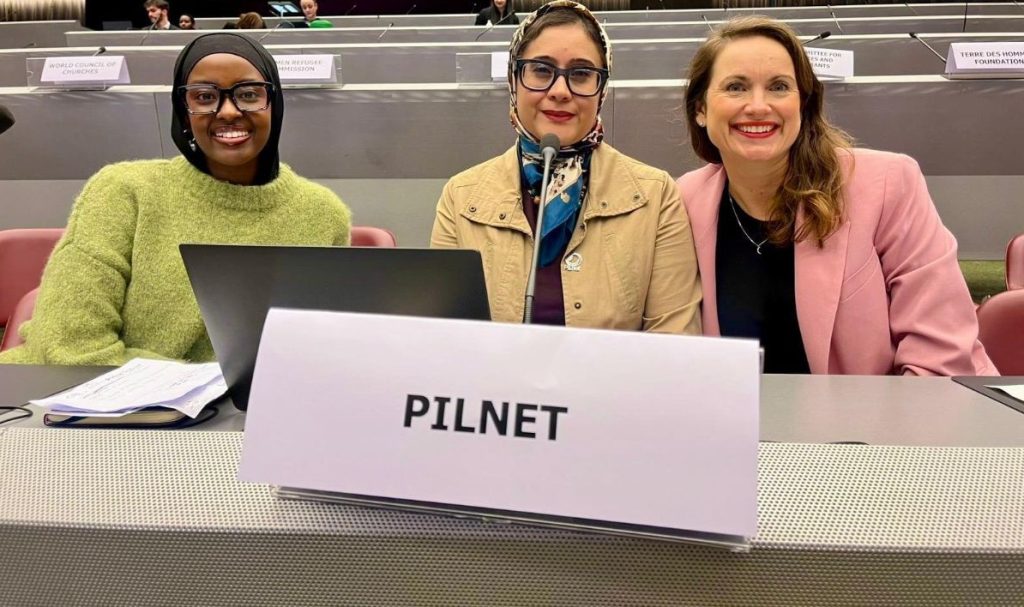
Members of our team who guide and implement our Forced Displacement work at PILnet, Yusra Herzi, Jasmine Simperingham, and Dr. Awmaima Amrayaf shared their reflections on the anniversary, explaining the pressure on the Refugee Convention and the role of the legal community in upholding the rights it contains as well as the importance of moving from consultation to genuine power sharing with those with lived experience of displacement.
What we will be doing
- Engaging with UNHCR and the coalition to ensure the legal community is an integral part of the dialogues taking place throughout the year, and that the importance of legal assistance and access to law is reflected throughout.
- Using our convening power to bring members of the legal community together with refugees to interrogate how the legal community can respond more effectively, including through a dedicated session at the PILnet Global Forum in Cape Town and further discussion at our Pledge Workshop on Friday, 13 November.
- Supporting GRF Legal Community Pledge members, encouraging and supporting them to hold their own dialogues, and helping translate those discussions into practical actions to strengthen access to justice, support refugee-led solutions, and close the gap between rights on paper and rights in practice.
What you can do
- Join the Global Refugee Forum (GRF) Legal Community Pledge. Commit to providing pro bono hours, hiring and including refugees in your work, and advocating for stronger legal protection for displaced people. If you have not already joined, this is the most direct way to make a sustained, structured commitment to refugee rights, aligned with advocacy and other collective efforts.
- Offer your pro bono capacity. The GRF Legal Community Pledge matching mechanism exists precisely to connect firms with organizations working on forced displacement, and demand continues to outpace supply. Look out for matters on our global clearinghouse list and take part in our upcoming Refugee Rights Pro Bono Roundtables in Asia and the US. Firms that have committed to the Pledge receive prioritized access to these impactful pro bono opportunities.
- Look honestly at how you work. Are your partnerships with displaced communities and the organizations serving them genuinely equitable? Ask your partners whether your tools, your processes, and where you direct your legal assistance actually match what is needed.
- Use this anniversary as a moment to connect and influence. Reach out to local organizations and refugee-led groups in your community; bring colleagues and clients into the conversation; and help shift the narrative around refugees within your firm or institution and beyond it.